Christmas in Poland is generally a family holiday and is most often celebrated with family and friends, with Christmas Eve being the most festive part of the holiday, which children invariably associate with presents under the Christmas tree.

Photo: Tessa Rampersad (Source: Unsplash)
In many countries around the world, including the United States, Great Britain, and the Netherlands, Christmas Eve is not considered a special occasion worth celebrating. It is an ordinary, everyday day. The main practice is a celebratory dinner on Christmas Day, December 25th, which is also the day when people exchange gifts.
In Poland, Christmas Eve, December 24th, is considered the most special night of the year. Legend has it that even animals can speak on this night. The tradition of celebrating Christmas Eve is inextricably linked to a festive family dinner, during which fasting dishes are consumed.
Many Christmas Eve customs and superstitions trace their roots to pre-Christian rituals and beliefs. Many are, let's just say, surprising, such as keeping scales from the Christmas Eve carp in your wallet, which is supposed to bring financial prosperity in the coming year.
Saint Nicholas' day
The foretaste of Christmas in Poland comes on December 6th, a day known as St. Nicholas Day (Nicholas' nameday) and the unofficial beginning of the Christmas season. On this day—or more precisely, on the night of December 5th to 6th—all well-behaved children in Poland receive small gifts (fruits, cookies, and sweets), while naughty children might receive a piece of coal or even... a punishment rod.
Decorating the Christmas tree
In Poland, the traditional Christmas tree isn't decorated until Christmas Eve, or just before. This is a significant difference, for example, from the United States, where the tree is decorated right after Thanksgiving, meaning at the end of November, or even earlier. And that's not even to mention the absurd commercialization that has seen Christmas decorations in some stores as early as... August. I've seen it myself.
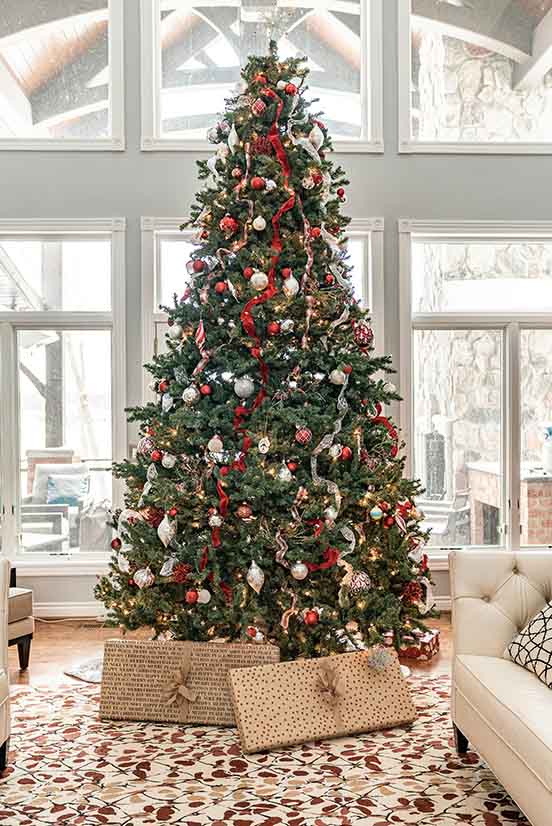
Photo: Cameron Stewart (Source: Unsplash)
Decorating a Christmas tree is a custom with non-Polish roots. Bringing home a pine tree and decorating it with various ornaments first appeared around the 18th century in German territories and eventually spread from Germany to other Christian countries. In Poland, this custom caught on only in the late 19th century, and then only in the homes of the bourgeoisie and nobility—but today, it's hard to imagine any Polish home without a Christmas tree at Christmas.
Decorating the Christmas tree is a family activity, starting early in the morning. Those who buy a real tree, usually a pine or spruce, do so several days in advance and store it on a balcony or outside the house to prevent it from withering or drying out prematurely, and its needles from falling off. After all, the tree must last until Epiphany (January 6th).
However, when I was young, I often saw latecomers on the streets buying a Christmas tree at the last minute, just before Christmas Eve dinner, often at a reduced price, but taken from a rather limited selection.
Christmas Eve Post
Christmas Eve is traditionally—at least in Poland—a strict fast. This means that no one eats anything until Christmas Eve dinner (except, of course, those who must, such as the sick, children under 14, incorrigible gluttons, etc.). It's no wonder that even adults can't wait for the feast to begin. According to tradition, Christmas Eve dishes should also be fasting, meaning meatless and free from animal fats.
In the Catholic Church, the obligation to fast was officially abolished in 1983, but in Poland the Episcopate maintained the Christmas Eve fast with a special document until 2003. Since then, fasting on Christmas Eve has only been recommended, but the tradition lives on thanks to the unchanged Christmas Eve menu, which is dominated by fish and fasting dishes.
The traditional fast on December 24th isn't common to all Christians, or even Catholics themselves. My Catholic friends in South America report that they never fasted on Christmas Eve, for example. Protestants didn't observe any special regulations regarding whether meat could be eaten on Christmas Eve. Orthodox Christians, on the other hand, are strictly obligated to fast on that day until Christmas Eve dinner. Customs vary from country to country, as the old Polish proverb goes.
Currently, Poland is probably the only country where abstaining from eating meat on Christmas Eve is such an important element of Christmas preparations.
Christmas gifts
All children eagerly await Christmas Eve, but for many, it's a true torture that tests their patience. Presents appear under the freshly decorated tree unexpectedly, during the day, whenever it's convenient for Santa Claus to drop them off—and he always manages to do it completely unnoticed, despite the children's constant attempts to catch him. But once these small or large, yet always numerous, elegantly wrapped packages have arrived, they—much to the children's chagrin—are forbidden from being opened until after Christmas Eve dinner. It's simply unbearable torture, when every minute seems to last for hours!
I grew up with these strict customs, but I later had to make some concessions for my own children. By special agreement with Santa Claus, gifts in our home—in America—were delivered the night before Christmas Eve, so that from the morning on, the children (and adults too) could open one at a time, as each hour passed. This made the agonizing wait a little more pleasant and provided an opportunity for banter, family fun, and jokes.

Photo: Bru-nO from Pixabay (Source: Pixabay)
Technically, however, when everyone had satisfied their hunger and Christmas Eve dinner was drawing to a close, it was time for the ceremonial opening of presents. Typically, it was the youngest—but already well-read—family member who would eagerly dive under the tree and carefully pull out one gift at a time, trying to guess what was inside by judging its weight ("Clothes again!" could be heard with clear disapproval), shaking the package to their ear while listening intently, ultimately identifying the recipient based on the—often humorous—inscriptions on the wrapping, and finally handing the gift over to the intended recipient. The recipient had to open it and politely express their boundless joy at receiving—for example—another pair of socks or a winter scarf.
Regional differences: the same Christmas Eve, yet different
Although many people speak of the "Polish Christmas Eve" as a uniform ritual, in practice it's a mosaic of customs that can change even after traveling mere dozens of miles. In Pomerania and Greater Poland, gifts are often brought by the Star Giver (definitely more assertive than Santa Claus), in Silesia, it's the Child, in Lesser Poland, an Angel, and in some homes, simply the "starlet" appears. The effect is the same: packages under the tree, but the "logistics" and terminology are different. And that's the beauty of it—because these differences are like family dialect: you recognize "your own" by who brings the presents.
First star
Since presents could only be opened after Christmas Eve dinner, children—with typical determination—watched for the first star, which signaled the beginning of the supper. The anticipation of the first star is a symbolic reference to the Star of Bethlehem, which signifies the birth of Jesus, and which, according to the Bible, was seen in the eastern sky by the Three Wise Men.
The first "star" at this time of year can appear, in Polish latitudes, quite early in the afternoon, around 4 p.m., especially if it happens to be the Evening Star—not a star at all, but the planet Venus, shining brightly just after sunset, as it often does. But no one pays attention to such astronomical details when it comes to, firstly, hunger, and secondly, the desire to finish dinner and open presents as quickly as possible. A star is a star, and that's it! Regardless of whether a star actually appeared in the sky or just thick December clouds could be seen, the moment of the "first star" had something of a ritual about it: a clear boundary between everyday life and the festive season.
Of course, astronomical observations, and the children's hopes connected with them, can easily be thwarted by complete cloud cover, which is not uncommon at this time of year. In such cases, the "first star" and the signal for the start of dinner is considered to be the moment when it is dark enough for the star to actually appear.
Christmas Eve, as far as I can remember — unless it fell on a Saturday or Sunday — was always a normal working day, which meant that many times our family started dinner much later than just after the first star appeared, which caused even greater frustration for all the younger members of the family.
Nativity scene
A Christmas tradition is the setting up of nativity scenes, depicting the stable in Bethlehem, the visit of the Three Kings, and other Christmas paraphernalia. Nativity scenes are traditionally displayed in churches, and smaller versions decorate some private homes. The custom of setting up a nativity scene out of figurines, or at least a manger with hay and a figurine of the Christ Child lying within, reportedly dates back to the 13th century.
Poles often create their own nativity scenes or use pre-made elements purchased to create this decoration. The Polish version of the nativity scene can take on a second life: Krakow has developed a tradition of nativity scenes, resembling miniature palaces with towers, often inspired by the city's architecture (as if someone had moved Bethlehem to Wawel Castle and added a touch of gold). It's not just decoration, but a whole craft: intricate constructions, tissue paper, foil, glittering elements, and hundreds of hours of work. Sometimes it's no longer a "nativity scene," but a small work of folk art—and it's no wonder that many people remember these nativity scenes from their childhood: colorful, filled with lights, and seemingly taking on a life of their own.
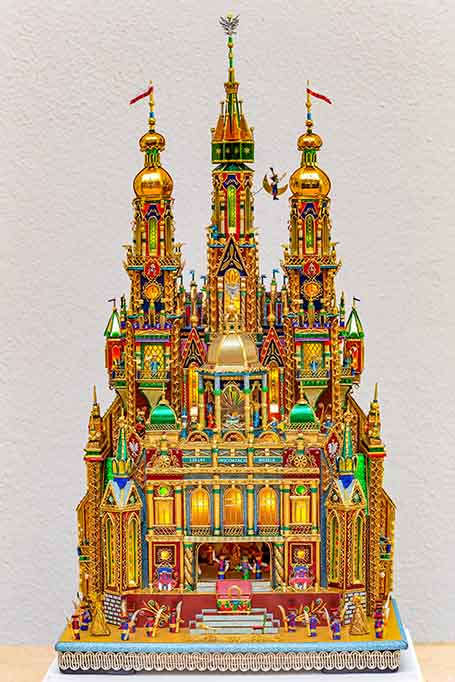
Krakow Nativity Scene (Source: Krakow Museum)
I remember how passionately I collected chocolate wrappers (or "chocolate-like products" in the times of "advanced socialism" and shortages in stores) for precisely this purpose.
Hay under a white Christmas Eve tablecloth
Another Polish Christmas Eve tradition is placing hay under the tablecloth. This symbolizes the stable in Bethlehem, the birthplace of Jesus, and the poverty into which he was born. However, the tradition of hay under the tablecloth is said to date back to pagan times.
Today, this is no longer observed so carefully, but in the past it was unthinkable that a tablecloth of any other color than snow-white, a symbol of purity and immaculateness, could be placed on the Christmas Eve table.
Today, hay under the tablecloth is primarily associated with Bethlehem symbolism, but in many homes it also served as a pretext for a rather secular tradition: after dinner, straws of hay were drawn, and their appearance was supposed to foretell the future. Simple? Simple. Green and long – health and success, short – "well, as long as it takes until spring," broken – these were interpreted differently, usually depending on the mood of the person drawing the straw. Such small rituals bring something of the old folk imagination to Christmas Eve: a bit of seriousness, a bit of fun, and a bit of childlike magic.
Extra place setting at the Christmas Eve table
Traditionally, when setting the Christmas Eve table, an extra, empty place setting is set for an "unexpected guest," meaning there is one more place setting than there are participants. This means that on this evening, everyone is ready to welcome and invite to the table anyone who knocks on the door. On this day, no one should be alone. Christmas Eve is, after all, considered an evening of special hospitality, as a response to the inhospitality shown to Jesus by the people of Bethlehem.
The empty place setting also symbolizes remembrance of loved ones who were unable to spend the holidays with us or who have passed away forever. In practice, the place at the table usually remains empty throughout the entire dinner.
Although an empty place at the table carries profound symbolism, in practice it was rarely a genuine invitation to a stranger. It was more a sign of a ready heart than a realistic scenario. Many people, however, recall that the mere existence of an extra place setting brought a tone of reflection and contemplation to the meal, reminding them of absent loved ones, emigrants, or those spending the holidays alone. It's one of those customs that appeals more to the imagination than to reality.
The Christmas tradition of leaving a place and a place setting for an unannounced traveler is a remnant of ancient Slavic beliefs, where untouched food was left for the spirits of ancestors. This custom is uniquely Polish and, as far as I know, not practiced anywhere else.
Twelve Dishes
Tradition has it that the Christmas Eve table should include twelve dishes, the number of which symbolizes the number of the Apostles or the number of months in the year. Because fasting is obligatory throughout Christmas Eve, fish in all its forms is served instead of meat at Christmas Eve dinner, especially carp, cod, and herring, and with today's availability, various other species of fish.
Twelve dishes are easier to come by if you treat them flexibly: in some homes, they count the types of dishes, in others, "something with poppy seeds" as a separate category, and in still others, herrings "in oil" and "in cream" are counted separately, because they are two different worlds. It's also interesting that in the past, the number of dishes often depended on wealth: in peasant homes, there were fewer of them, but everyone had to at least try everything—not only "for luck," but also for a very practical reason: so that the housewife would know what to make in larger quantities the following year.
Although tradition speaks of twelve dishes, in many homes no one counted them with apothecary's precision. Rather, the intention and symbolism of abundance mattered – the table was meant to be full, varied, and welcoming. Historically, it was believed that the number and abundance of dishes would ensure abundance in the coming year, so even modest families strived to ensure there was nothing missing, and if there was, they made up for it with ingenuity. Christmas Eve was one of the few days of the year when food was supposed to not only satisfy but also "foretell."
When I was growing up in the 1970s and 1980s, not every family could always manage to prepare twelve different traditional dishes. "Creative accounting" helped maintain tradition, sometimes counting bread, salt, and pepper as separate dishes.
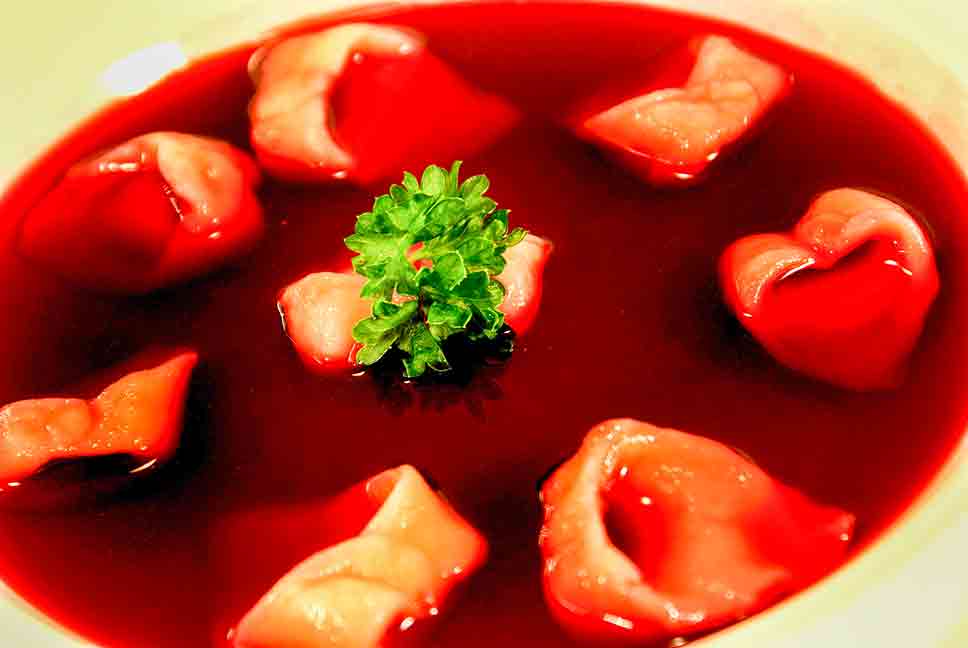
Borscht with dumplings (Photo: Wikimedia Commons)
The list of Christmas Eve dishes can vary depending on the region and family tradition. Traditional Christmas Eve dishes, at least in my wife's and my family, usually included many delicacies such as:
- carp in jelly
- breaded fried carp (or other fish) in breadcrumbs
- fish "Greek style"
- herring in cream with apples
- rollmops, i.e. herring rolled and marinated in vinegar
- herring in oil with onion
- fasting red borscht
- uszka, i.e. tiny dumplings with mushrooms for borscht
- pates with sauerkraut and mushrooms
- mushroom soup
- fish soup (I personally hated it)
- fish balls for fish soup
- dumplings with cabbage and mushrooms
- kutia (wheat with poppy seeds, honey and dried fruits)
- dumplings with poppy seeds
- poppy seed cake
- gingerbread
- compote "made from dried fruits", mainly dried plums
Carp (Cyprinus carpio) is a fish inextricably linked to Christmas, in my opinion, though it doesn't particularly delight Americans, perhaps because the American variety has a slightly different taste and texture. In Poland, however, it's a coveted "royal carp," meaning the kind of fish supposedly served at the tables of the reigning monarch. Carp in gelatine has always been my favorite Christmas Eve dish, and only a Christmas Eve one, and thus eagerly anticipated all year long.

Carp (Cyprinus carpio) (Source: Wikimedia Commons)
An interesting fact is that carp was bought alive, sometimes a few days before Christmas Eve, having to stand in a very long line in front of the "Fish Central" for even several hours, and — when they finally delivered it and one managed to buy it and bring it home — it was kept alive until December 24th in... a bathtub filled with water, usually in the only bathroom in the house.
Dried fruit compote also appears among Christmas Eve dishes for good reason: pears were said to ensure longevity, apples to bring love and health, and prunes to ward off evil spirits. The perfect antidote for the current times!
Note: During the Christmas Eve feast, you must taste all twelve dishes, otherwise you risk misfortune in the coming year!
Sharing the Christmas wafer
A wafer is simply a thin sheet of baked dough, or rather a flake, made of baked wheat flour and water. It is therefore a form of bread, usually white in color and very thin indeed. Its (Polish) name — opłatek — comes from the Latin word oblatum, meaning offering. The sharing of bread has its roots in pagan traditions, which over time became a permanent part of Christian customs.
The breaking of the wafer must take place with all participants at the beginning of the supper. Just before the Christmas Eve dinner begins, Poles share the wafer and exchange greetings. Sharing the wafer and exchanging wishes is one of the most important Christmas Eve traditions in Poland and—besides Poland—in only a handful of other European countries. These include Lithuania, parts of the Czech Republic, Slovakia, Ukraine, and—interestingly—even Italy.
The Christmas wafer is a symbol of reconciliation and forgiveness, and people who are at odds or harbor any resentment are not allowed to sit at the Christmas Eve table. Through this reconciling gesture, families sitting at the Christmas Eve table demonstrate their affection for each other, their lack of resentment, and their sense of connection. Sharing the wafer is meant to bring people closer and unite.
The Christmas Eve wafer was traditionally shared with all household members, including pets (a dog will eat anything, as we all know, but cats are a completely different story), and in the countryside, it was also given to farm animals to protect them from illness and curses.
In many families—especially those separated by emigration—the wafer was (and still is) sent by post in a white envelope, often with the note "do not bend." It's one of those small gestures that only gains significance when one spends the holidays far from home. The wafer, though modest and almost tasteless in itself, can then be more substantial than the entire menu: it carries within it ritual, reconciliation, good wishes, and sometimes even that subtle melancholy of being absent—yet remembered.
Mistletoe
A special tradition for all lovers, though not necessarily unique to Poland, is hanging a piece of mistletoe in the home. Every time someone stands under it, they must give someone a kiss.
In ancient Roman times, mistletoe was a symbol of love and friendship, hence the tradition of kissing under it.
Carol singing together
Christmas carols have a special status in Poland: they are not "background music," but the common language of the holidays. Singing carols is an important element of Christmas. There are many carols in the Polish tradition, the oldest of which date back to the Middle Ages. Some carols, such as Silent Night, have an international character. The most well-known Polish carols include Wśród nocnej ciszy, Bóg się rodzi, Lulajże Jezuniu, Przybieżeli do Betlejem, and Today in Bethlejem.
The shared singing of Christmas carols, involving all participants of the Christmas Eve supper, is a tradition that seems to be becoming less and less common. In some regions of Poland, carolers also visit homes, offering best wishes and singing carols in exchange for a snack, a drink, and "whatever you can spare."
Interestingly, many carols have multiple versions of the lyrics, and families can argue half-jokingly about whether "in the manger" is sung one way or another. Sometimes, carol singing is the most democratic moment of the entire evening: suddenly everyone has a voice—and even if someone sings off-key, they sing "in God's name," meaning together. In some homes, singing carols was also a subtle way to slow down the pace of eating and remind everyone that it's not just a dinner, but a ritual.
Midnight Mass
Midnight Mass is a mass celebrated at exactly midnight, after Christmas Eve, and therefore during the first hour of Christmas. An integral part of it, besides the liturgy itself, is the singing of Christmas carols.
Singing carols in this setting doesn't require great musical talent; after a lavish Christmas Eve feast, no one particularly cares about the musical quality of the performance. However, Midnight Mass is a unique opportunity to showcase one's vocal talents and, on the other hand, to hear carols distorted in every possible way by the—unfortunately—often tipsy crowd. At least, those are my childhood memories.
Midnight Mass was—and in many places still is—an almost nocturnal pilgrimage. After a full day of preparations and a long dinner, people, often exhausted, would leave their homes on the frosty night to attend Mass together. In small towns, it was also an opportunity for social gatherings: the one night of the year when the church was filled to capacity, and afterward, people exchanged greetings with neighbors. For children, Midnight Mass was often their first "night outing," and for adults, it symbolically concluded Christmas Eve and ushered in the Christmas season.
"Talking Animals"
The legend of talking animals sounds like a fairy tale today, but its charm lies in something simple: on Christmas Eve, the world is supposed to cease to be ordinary for a moment. Children listen, adults pretend not to believe, and yet—somehow, doors close more quietly, people speak more gently, plates are placed more carefully. This one night of the year has a special "softness" in Polish tradition: as if everyone, even for a moment, wants to live better than they do every day.
Christmas
December 25th marks Christmas, but also the name day of Adam and Eve, while December 26th is Boxing Day in Poland, commemorating St. Stephen, the first martyr for the Christian faith. Both days are public holidays, designated for rest, caroling, and family gatherings.
Cultivating Polish holiday customs, especially abroad, helps deepen family bonds and maintain national identity. It also gives Christmas celebrations a unique festive atmosphere that can be eagerly anticipated for many months, regardless of age.
We wish you a healthy and Merry Christmas!
The article, in a slightly shorter version, was originally published on the Kuryer Polski website in 2020.