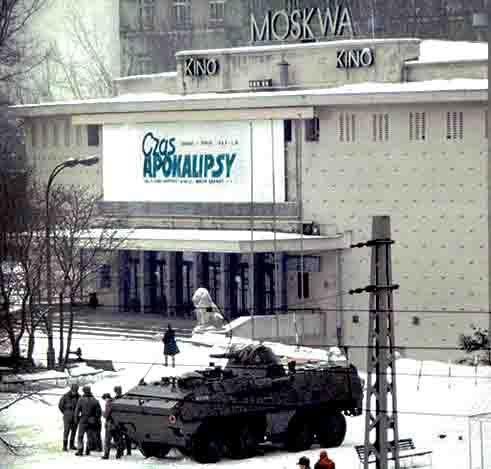
"It's 6 a.m. A bang and two more powerful impacts. Tanks have breached our barricade." This is how Anna Walentynowicz, the legendary crane operator and activist of the NSZZ "Solidarity" trade union, will remember December 16, 1981. It was the fourth day of martial law – a war declared against its own nation by Wojciech Jaruzelski's communist junta.
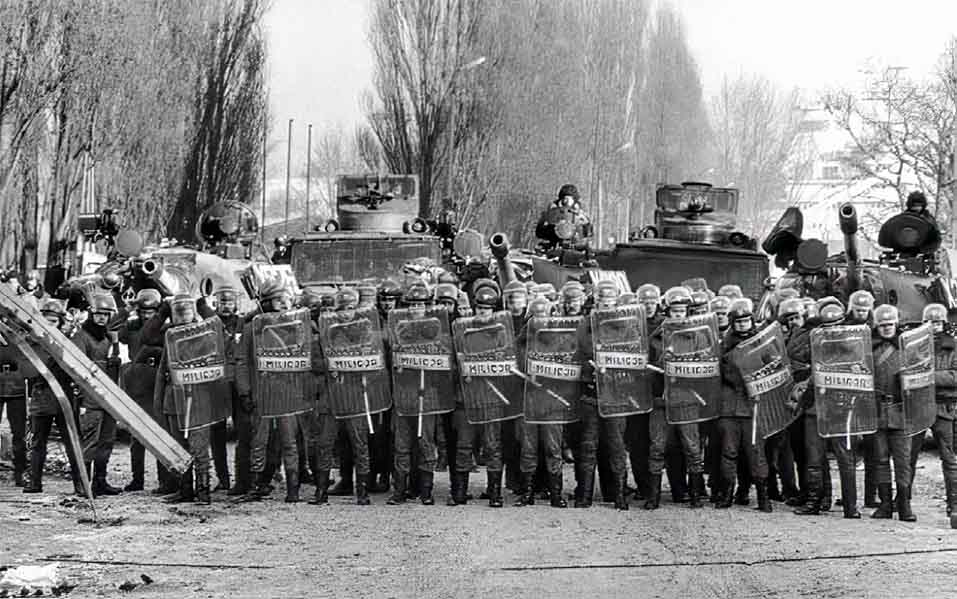
Martial law in Poland, 1981 (Source: IPN)
Several thousand members of Solidarity and the democratic opposition have already been interned. Those who managed to avoid arrest are demanding the release of their colleagues. The birthplace of Solidarity – the Lenin Shipyard in Gdańsk – is also on strike. Walentynowicz calls for "unification, joint action, and defense of the union." Against workers like her, armed with patriotic hearts, the authorities are sending in tanks, helicopters, several hundred militiamen, and a platoon of commandos. The outcome of this unequal battle is easy to predict.
Lost Decade
Sixteen months earlier, in August 1980, history with a capital H was being made at the same Gdańsk Shipyard. A strike broke out at the plant and quickly spread throughout Poland. The Inter-Enterprise Strike Committee, headquartered at the shipyard, announced 21 demands, the first of which, given the Eastern Bloc's circumstances, sounded revolutionary: the acceptance of "free trade unions independent of the party and employers." The communists, their backs to the wall, temporarily gave in. Thus was born the Independent Self-Governing Trade Union "Solidarity"—a multi-million-strong, uncontrolled social movement unmatched in any other country dominated by the USSR. This marked the beginning of a period still known today as the "Carnival of Solidarity"—a breath of relative freedom in a still oppressive state.
For the communist dictators, this state of affairs is only acceptable in the short term. PZPR leader Stanisław Kania hopes that Solidarity can be brought under control, that "anti-socialist forces" can be removed, and that a "healthy working-class current" can be gradually integrated into the rigid framework of the system. Simultaneously, the Ministry of Internal Affairs and the military are preparing to deal with the union by force. Jaruzelski, who replaced Kania as party leader in October 1981, chooses the latter option—in line with Soviet expectations, and unfortunately for the nation.
Martial law, declared on the morning of December 13, 1981, was intended to break the back of "Solidarity" and all democratic opposition. Internment centers and detention centers quickly filled with freedom fighters and workers' rights advocates. The communists banned strikes, gatherings, trade unions, and many other organizations. Resistance was ruthlessly crushed. On December 16, the army and militia massacred protesting miners from the "Wujek" Coal Mine in Katowice – the bloody toll of this action was nine dead and many more wounded. Draconian sentences were imposed – and are handed down – for the slightest form of resistance. Ewa Kubasiewicz, co-author of the opposition leaflet, was sentenced by a military court in Gdynia to ten years in prison.
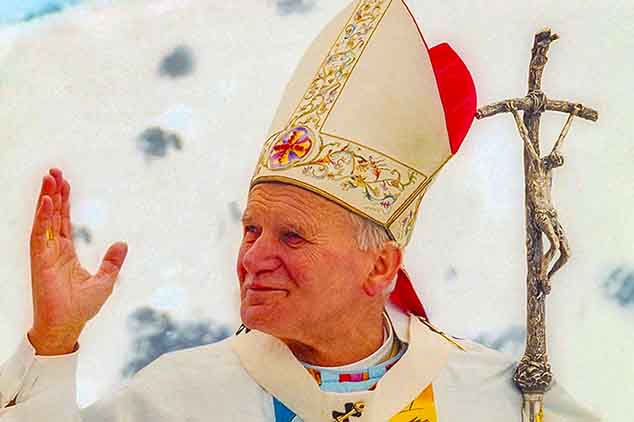
Despite the closure of the borders by the Red regime, everything is happening before the world's eyes. In the Vatican, Pope John Paul II suffers alongside his compatriots, offering them encouragement and admonishing the communist authorities. "A state cannot be strong through the force of any violence," he appeals during one of his audiences. "Poland needs cooperation between the government and the people, not military oppression," echoes US President Ronald Reagan. In the same speech, he calls on Americans to light candles in their windows on Christmas Eve as a gesture of solidarity with the "brave Poles." Famous Hollywood artists – including Kirk Douglas and Frank Sinatra – record the television program "Let Poland be Poland" in a similar gesture of solidarity.
Jaruzelski's team suspended martial law only in December 1982, and in July of the following year announced its final abolition. The communist authorities tried to convince the West that "normalization" was progressing in Poland. But those inconvenient to the regime were still forced into emigration, imprisoned, or even killed – such as the charismatic Father Jerzy Popiełuszko, brutally murdered in the fall of 1984. "Solidarity" still had to operate underground, but its myth remained alive. The June 1989 elections – although not yet fully free – ended in a spectacular defeat for the communists. They gradually lost further footholds of power.
Complete the transformation
"There will be no punishment for the average scoundrels, / And the people will sacrifice in vain," prophesied Jacek Kaczmarski, a poet and singer known as the bard of "Solidarity," in 1982. The artist's pessimistic prediction, expressed in the middle of "the night of martial law," fortunately did not come true. Thanks to the sacrifice of the "Solidarity" generation, the communist system finally collapsed, and Poland found itself within the Western alliance system.
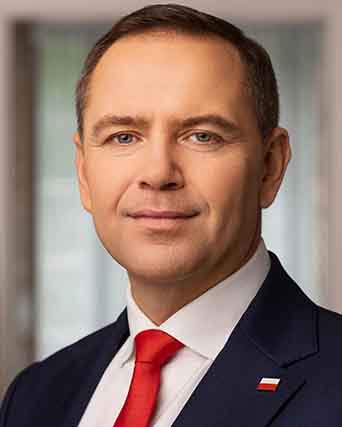
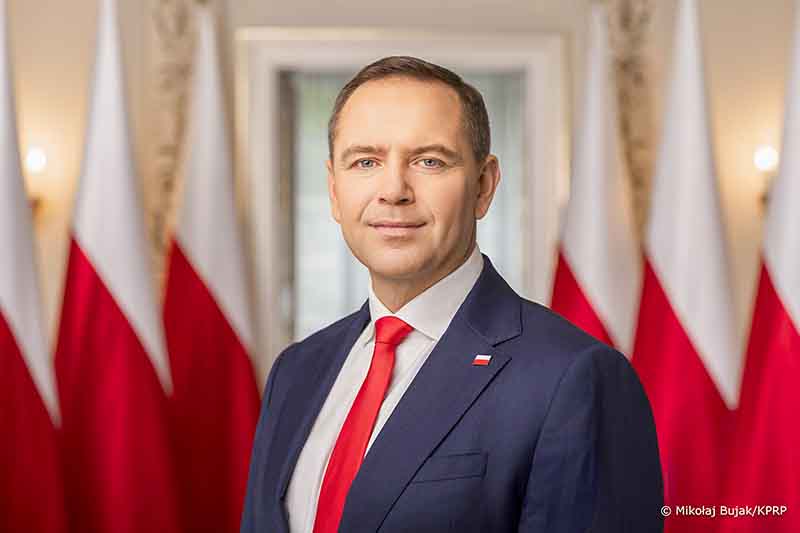
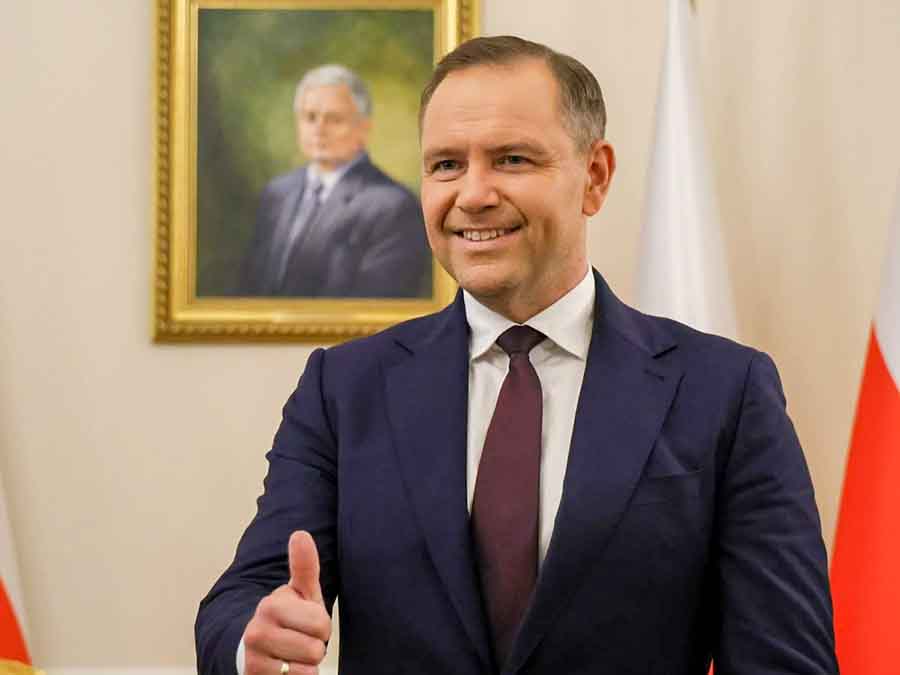
Indeed, many of those responsible for the crimes of the Red Regime escaped earthly punishment and, like Jaruzelski, were even buried with honors. However, the Institute of National Remembrance, which I have the honor of leading, is committed to finally completing the decommunization process begun three and a half decades ago. We have announced the "Archive of Crimes" project to once again examine the criminal activities of the communist authorities in the 1980s. We are conducting extensive research on martial law and refuting Jaruzelski's false claims on the subject.
Last but not least, we pay tribute to those who, despite repression, were unafraid to fight for a sovereign Poland. A few weeks ago, on November 10th, in my hometown of Gdańsk, I attended the unveiling of a plaque commemorating Anna Walentynowicz, the Mother of Solidarity. A free Poland's public space must have a dignified place for our heroes.
Translation from Polish by Andrew Wozniewicz.