On November 4th, in Essen, North Rhine-Westphalia, a city with a significant Polish community in Germany, President Karol Nawrocki, through his chaplain, Father Jarosław Wąsowicz, honored Wojciech Kusy, a Polish activist and former oppositionist, with the Knight's Cross of the Order of Polonia Restituta. The distinction was awarded to him for "promoting Polish culture and history abroad and for his work with the Polish diaspora." The award ceremony took place at the Polish Parish of St. Clement in Essen. It is worth taking this opportunity to familiarize the wider Polish community and all Polish patriots with the Knight's Cross of the Order of Polonia.
Wojciech Kusy has lived here since 1987. He was an activist in the anti-communist opposition and "Solidarity," as well as in the underground movement of the Silesian-Dąbrowa Region. He was repressed, beaten with batons in the kidney area during the famous "health trails" (he still fears the physical examination of his kidneys), and was forced by the communist authorities to leave his homeland before the fall of the Polish People's Republic. By chance, he found himself on German soil, then in West Germany.
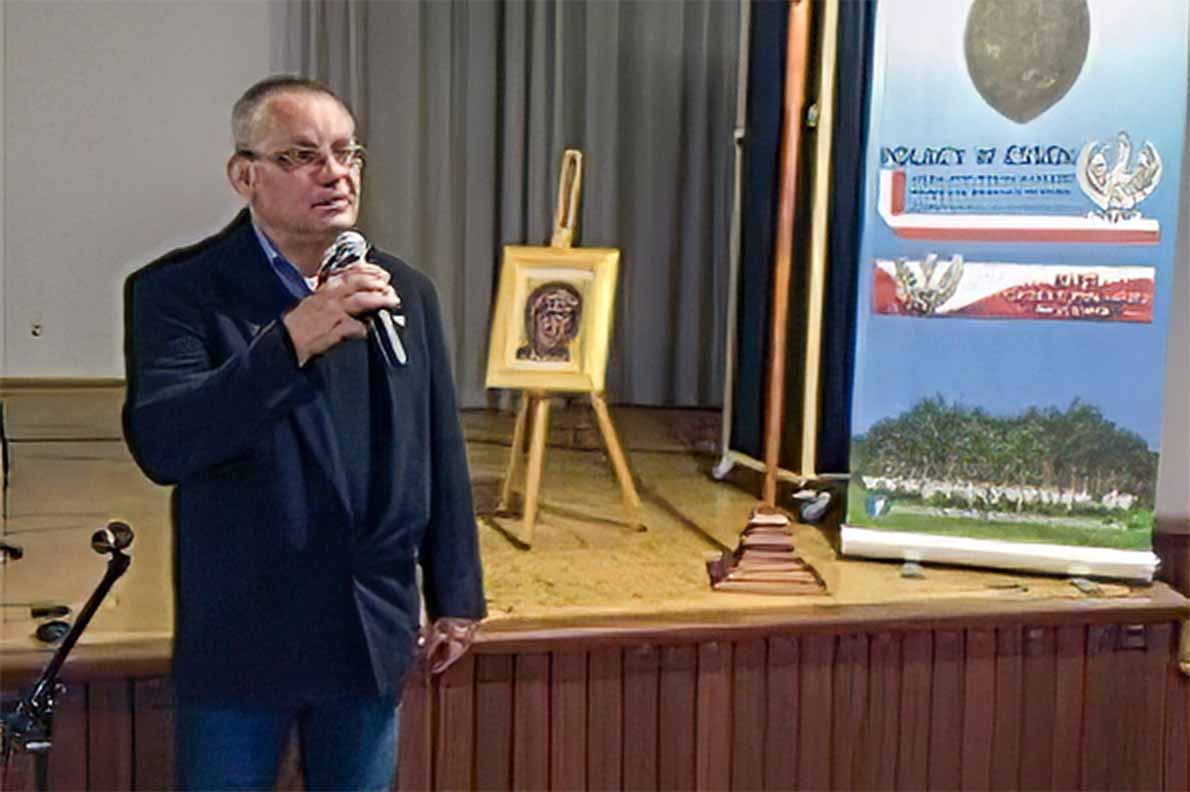
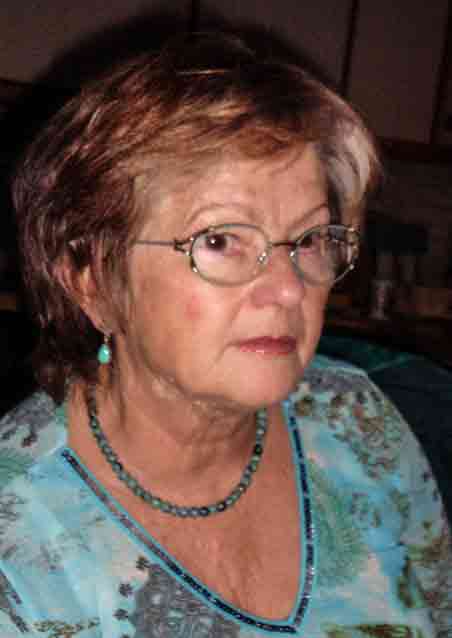
Wojciech Kusy (Source: M. Legieć)
Wojciech Kusy never forgot his roots—or his compatriots who, like him, settled in the Ruhr region. This is evidenced by his creation in 1997—and its continued existence to this day—of the "Poles in Essen" portal, where he served as managing editor. This portal provided assistance to Poles living in Germany in contacting German authorities, offices, and institutions. Wojciech Kusy actively participated in its structures.
One of its significant successes, and a testament to his commitment to the organization's dynamic work, is that in the local elections in Germany in the late 1990s, the "Poles in Essen" organization elected the first Polish representative to the Essen City Council for Foreigners (German: Ausländeramt der Stadt Essen). Since then, in each election, the group "Poles in Essen" has introduced one or two members to this institution, which currently operates under the name of the Integration Council of the City of Essen (German: Integrationsrat der Stadt Essen).
Despite spending half his life in exile, Wojciech Kusy never allowed himself to be germanized and remained loyal to Poland, respecting its historical and cultural heritage. As leader of the "Poles in Essen" group, he invited patriots and representatives of Polish political thought to meetings with Poles living in Germany. Among them were Paweł Piekarczyk, a bard-patriot; Tomasz Sakiewicz, founder of the Gazeta Polska clubs; Andrzej Melak, a representative of the Katyn Families Association; Mieczysław Ryba and Paweł Bortkiewicz, professors at the Catholic University of Lublin; and Krzysztof Szwagrzyk and Karol Nawrocki, employees of the Institute of National Remembrance.
Wojciech Kusy didn't deliver lectures from the podium, nor did he expect the Polish government to engage the Polish diaspora. No! He rolled up his sleeves—and acted! He set to work wherever he happened to live. He created "a small homeland where the Polish heart beat"!
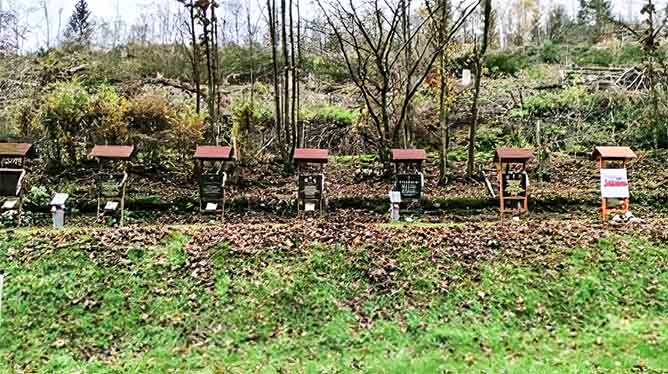
Commemorative plaques at the Polish Catholic Mission "Concordia" in Essen. (Source: Pressmania)
His love for Poland is truly touching. He shows that Poland is where Polish hearts beat. I was able to witness this firsthand while participating in patriotic gatherings organized by Wojtek in 2023 and 2024. I wrote about this in my article "Poles in Essen. A Living Hearth of Polishness on the Rhine and Ruhr" (Dziennik Berliński and Pressmania).
On the occasion of the 103rd Anniversary of Regaining Independence in Essen (2021), I was invited by Wojciech Kusy, and from that moment on, I have appreciated the significance of his ideological stance. I must emphasize that I have not experienced such a beautiful mood of upliftment and a sense of national unity, a true brotherhood of hearts, and profound patriotism as during my presence at the celebration of this Polish Day since I lived outside of Poland. In no other city in Germany can you encounter a group of Poles marching through the main streets with a Polish flag, fluttering in the wind to the rhythm of patriotic Polish legionary songs, accompanied by Andrzej Kołakowski, the bard of Polish patriotic music, who passed away today to eternal guard to the Almighty. His motto was: "It is better to die for Poland today than to live in the prywiśljański kraj." [A reference to an imperial Russian name for Poland. - Ed.]
My story about Him – about Wojtek, began like this:
It's time to say something about Someone who is the animator of all these events, the lifeblood of the Polish community in the Essen area and beyond. Wojciech Kusy is known among Poles as Wojtek. I'm also fortunate to be able to address him that way. He came to Germany two years after I arrived here, in 1987. Immediately after arriving in Germany, Wojtek tried to gather around him people interested in more than just making money and arranging a life, because that was too "flat," unworthy of a Pole with a "Polish soul," who he was (and is). After arriving in Germany, he talked to all sorts of people; Wojtek knows how to talk, and importantly, he knows how to listen. He has an excellent memory, connects facts, and interprets them with the talent of a scholar—a historian. He is a man of great personal intelligence, a genuine knowledge of Polish history, and a quick mind. He reads widely.
He recounted that after his arrival, he read an interview with Father Mroziuk from the Polish Catholic Mission in Dortmund, who told him, among other things, about the condition of emigration in Germany in the postwar years. Father Mroziuk recalled the stories of countless Polish and Polish-speaking groups and associations that had formed in Germany, their achievements, and their activities. Wojtek's attention was caught by Father Mroziuk's statement that "the Polish emigration in Germany had not developed its own political representation during that time." It was probably then that the idea of creating a group uniting the numerous Poles living in North Rhine-Westphalia, called "Poles in Essen," first took root in Wojtek's mind.
It is his idea, of timeless significance, to initiate and implement a document of fidelity to Poland, carved in stone - the Polish Patriotic Pantheon on the premises of the Pastoral Centre of the Polish Catholic Mission "Concordia" (here it is referred to as the "American Częstochowa"), centered around the Gazeta Polska Club in Essen and the Polish Electoral List "Poles in Essen", where many Poles from emigration have always gathered - not only from Germany, but also from France, Belgium and the Netherlands, Sweden and Austria.
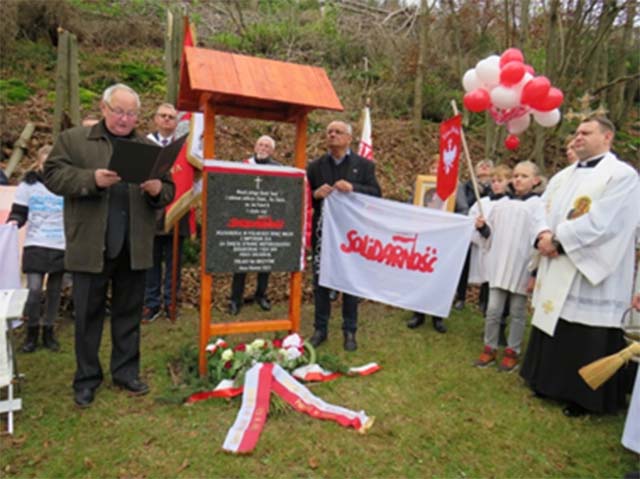
This is Wojtek's work, this row of seven marble plaques carved in the Concordia grounds, commemorating important events in Polish history: the Smolensk Disaster, the Volhynian Genocide, Polish victims of World War II, the Steadfast Church, the Battle of Warsaw in 1920, and the Regaining of Independence in 1918. The last, seventh plaque, the unveiling of which I was fortunate enough to participate in, was dedicated to the anniversary of the founding of the Solidarity Trade Union.
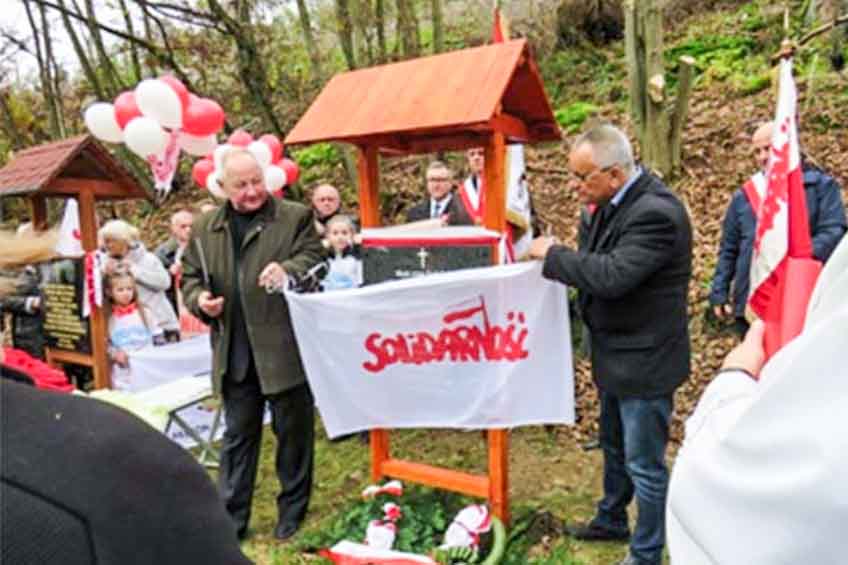
Unveiling of the commemorative plaque in Essen. Wojciech Kusy on the right. (Source: M. Legieć)
Wojtek is a very humble man. He prefers to stay in the shadows, doesn't seek recognition, and doesn't claim any credit for anything – even though he's accomplished so much in his life that dozens of other biographies could be filled with them!
The leitmotif of these plaques at Concordia is: "The victims cry not for revenge, but for memory!"
"There will be more plaques," Wojtek announced then. The next one, the eighth, was supposed to be in his plans—dedicated to the Silesian Uprisings.
Unfortunately, Wojtek has been battling the worst disease that can afflict a human being for some time now. Let us pray that it doesn't defeat him.
Translation from Polish by Andrew Wozniewicz.